• Obama’s Presidential Rhetoric

    The Guardian presents an analysis of Obama’s campaign trail speeches, noting particularly how they recall ancient Greek imagery and skills from great Roman orators.

    During the Roman republic (and in ancient Athens) politics was oratory. In Athens, questions such as whether or not to declare war on an enemy state were decided by the entire electorate (or however many bothered to turn up) in open debate. Oratory was the supreme political skill, on whose mastery power depended. Unsurprisingly, then, oratory was highly organised and rigorously analysed. The Greeks and Romans, in short, knew all the rhetorical tricks, and they put a name to most of them.

    It turns out that Obama knows them, too.

  • The Most Popular (Canon) DSLR Lenses

    The readers of Darren Rowse’s Digital Photography School voted for their favourite lenses. Below are the overall top five, with Darren’s comments.

    (Plus links to reviews from The Digital Picture and approx prices from Amazon UK)

    1. Canon EF 70-200mm f/2.8 L IS USM (Telephoto Zoom) (£1300) – fast, great for portraits, weddings, sports, versatile focal length. Quite a heavy lens and not cheap.
    2. Nikon 50mm f/1.8D AF Nikkor (£90) – Nikons ‘nifty 50’ is a much loved lens and similar to the Canon version – for its price and quality it is a must have in your bag.
    3. Canon EF 50mm f/1.8 II (£70) – for its price perhaps the best value lens in terms of the quality of output.
    4. Canon EF 50mm f/1.4 USM (Standard & Medium Telephoto) (£260) – a step up from the f/1.8 in terms of build quality and results but more expensive.
    5. Canon EF 24-70mm f/2.8 L USM (Standard Zoom) (£890) – a great walk around lens. Faster than the 24-105 but no image stabilization.

    As a Canon owner I was also interested in the top ten Canon lenses. This included the 4 from above, and the following six:

  • Conducting Technical Interviews

    Eric Ries, ex-CTO and current tech startup advisor, offers advice on how to conduct a thorough and effective technical interview. Just one of many methods, obviously, but some good information nonetheless.

    Finding great engineers is hard; figuring out who’s good is even harder. The most important step in evaluating a candidate is conducting a good technical interview. If done right, a programming interview serves two purposes simultaneously. On the one hand, it gives you insight into what kind of employee the candidate might be. But it also is your first exercise in impressing them with the values your company holds. This second objective plays no small part in allowing you to hire the best.

  • World’s Center of Population

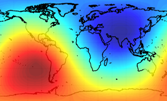
    The Final Evolution of Mona LisaThe world’s center of population is located at “the crossroads between China, India, Pakistan and Tajikistan”.  At this point, the mean distance to all humans on Earth is 3,200 miles (5,200 km).

    The opposite is a point in the South Pacific near Easter Island. From here, the mean distance to all humans on Earth is 9,300 miles (15,000 km).

    via Futility Closet

  • The Inefficiency of Christmas Gifts

    A letter to Tim Harford (The Undercover Economist) asks, What’s the best Christmas present?

    Your letter obliges me to disinter the influential research of the economist Joel Waldfogel on the “deadweight loss of Christmas”. Fifteen years ago, Waldfogel published an academic article demonstrating that the recipients of gifts would not generally have been willing to pay what it cost to provide the gift. A £30 sweater was valued at £20, for example, creating a “deadweight loss” of £10. Siblings were not the most incompetent givers – that honour goes to aunts and uncles – but they were not especially competent either.

    Waldfogel’s work is often misinterpreted as suggesting that gift-giving is pointless. That is not true. He explicitly excluded the sentimental value of gifts from his calculations, and, of course, the sentimental value is part of the purpose of giving presents. That may explain why the economists Sara Solnick and David Hemenway have discovered that we prefer unsolicited presents to those we have specifically requested. It may also explain why gift vouchers are a bad idea: they have no sentimental value but still create deadweight loss, since many expire without being used, or are sold at a loss on eBay – as the economist Jennifer Pate Offenberg has documented.

    All this points to the optimal gift-giving strategy: you need to minimise the deadweight loss while maximising the sentimental value. This suggests buying small gifts and striving for emotional resonance. Look for something inexpensive, and consider supplementing it with a letter, a photo, or time spent together.

    If you feel a financial transfer is necessary, slip a cheque into the envelope too.

    For a more in-depth look at Waldfogel’s research—and the implications thereof—The Economist takes up the slack.

    If the results are generalised, a waste of one dollar in ten represents a huge aggregate loss to society. It suggests that in America, where givers spend $40 billion on Christmas gifts, $4 billion is being lost annually in the process of gift-giving. Add in birthdays, weddings and non-Christian occasions, and the figure would balloon. So should economists advocate an end to gift-giving, or at least press for money to become the gift of choice?

  • Intelligence’s Effect on Sperm Quality

    The Economist presents a short article on how intelligence predicts—among other health benefits—sperm quality. Something I pointed to a couple of months ago when research results were first coming through.

    Recently, it has been discovered that an individual’s [intelligence] is correlated with many aspects of his health, up to and including his lifespan. One possible explanation for this is that intelligent people make better choices about how to conduct their lives. They may, for example, be less likely to smoke, more likely to eat healthy foods or to exercise, and so on.

    Alternatively (or in addition) it may be that intelligence is one manifestation of an underlying, genetically based healthiness. That is a view held by many evolutionary biologists, and was propounded in its modern form by Geoffrey Miller of the University of New Mexico […]. These biologists believe intelligence, as manifested in things like artistic and musical ability, is such a reliable indicator of underlying genetic fitness that it has been chosen by members of the opposite sex over the millennia. In the ensuing arms race to show off and get a mate it has been exaggerated in the way that a peacock’s tail is. This process of sexual selection, Dr Miller and his followers believe, is the reason people have become so brainy.

    Two complementary articles: The ‘evolution’ high of culture, Evolution has not come to an end (even if natural selection has).

  • Interview With a Somali Pirate

    A pirate boss speaks to The Guardian

    We give priority to ships from Europe because we get bigger ransoms. To get their attention we shoot near the ship. If it does not stop we use a rope ladder to get on board. We count the crew and find out their nationalities. After checking the cargo we ask the captain to phone the owner and say that have seized the ship and will keep it until the ransom is paid.

    We make friends with the hostages, telling them that we only want money, not to kill them. Sometimes we even eat rice, fish, pasta with them. When the money is delivered to our ship we count the dollars and let the hostages go.

    […] We split the money. For example, if we get $1.8m, we would send $380,000 to the investment man who gives us cash to fund the missions, and then divide the rest between us.

    Our community thinks we are pirates getting illegal money. But we consider ourselves heroes running away from poverty. We don’t see the hijacking as a criminal act but as a road tax because we have no central government to control our sea.

    […] We will not stop until we have a central government that can control our sea.

    So is the solution to give smaller ransoms, to go after the pirate financiers, or to help them get a controlling, central government?

    via Chris Blattman

  • The Year in Photographs

    I try not to link to individual entries from The Big Picture because, well, they’re all good. However, there’s always an exception.

    The Year 2008 in Photographs (Part 1, Part 2, Part 3) is a three–part collection of some of the best photographs from the year, covering a wide range of events.

    2008 has been an eventful year to say the least – it is difficult to sum up the thousands of stories in just a handful of photographs. […] It’s not the story of 2008, it’s certainly not all stories, but as a collection it does show a good portion of what life has been like over the past 12 months.

  • Time’s Year in Review

    In the most unsurpsing move of the year, Time has announced Barack Obama as Person of the Year, 2008. But it’s the other parts of the Year in Review issue that interest me the most.

    • People Who Mattered tells the story of those who have changed the course of science, politics and science in 2008: some for better, some for worse.
    • Fond Farewell is a tribute to those who left us this year, leaving much behind.
    • Pictures of the Year – do I really need to explain?
  • Snipers: Cowardly Assassins, or Surgical Soldiers?

    An eye-opening look at military snipers.

    It might be because there’s another side to snipers and sniping after all. In particular, even though a sniper will often be personally responsible for huge numbers of deaths – body counts in the hundreds for an individual shooter are far from unheard of – as a class snipers kill relatively few people compared to the effects they achieve. Furthermore, when a sniper kills someone, it is almost always a person they meant to kill, not just someone standing around in the wrong place and time. These are not things that most branches of the military can say.

    But, for a well-trained military sniper at least, “collateral damage” – the accidental killing and injuring of bystanders and unintended targets – is almost nonexistent. Mistakes do occur, but compared to a platoon of regular soldiers armed with automatic weapons, rockets, grenades etc a sniper is delicacy itself. Compared to crew-served and vehicle weapons, artillery, tanks, air support or missile strikes, a sniper is not just surgically precise but almost magically so. Yet he (or sometimes she) is reviled as the next thing to a murderer, while the mainstream mass slaughter people are seen as relatively normal.

    Consider the team who put a strike jet into the air: a couple of aircrew, technicians, armourers, planners, their supporting cooks and medics and security and supply people. Perhaps fifty or sixty people, then, who together send up a plane which can deliver a huge load of bombs at least twice a day. Almost every week in Afghanistan and Iraq right now, such bombs are dropped. The nature of heavy ordnance being what it is, these bombs kill and maim not just their targets (assuming there is a correctly-located target) but everyone else around. Civilian deaths in air strikes are becoming a massive issue for NATO and coalition troops in Afghanistan.

    Those sixty people, in a busy week, could easily put hundreds of tons of munitions into a battlefield – an amount of destructive power approaching that of a small nuclear weapon. This kind of firepower can and will kill many times more people than sixty snipers could in the same time span – and many of the dead will typically be innocent bystanders, often including children and the elderly. Such things are happening, on longer timescales, as this article is written. Furthermore, all these bomber people – even the aircrew – run significantly less personal risk than snipers do.

    But nobody thinks of a bomb armourer, or a “fighter” pilot”, or a base cook as a cowardly assassin. Their efforts are at least as deadly per capita, they run less personal risks, but they’re just doing their jobs. And let’s not forget everyone else: artillerymen, tank crews, machine gunners. Nobody particularly loathes them, or considers them cowardly assassins.

    via Schneier