• Unconscious Plagiarism

    Cryptomnesia, according to Wikipedia, is “a memory bias whereby a person falsely recalls generating a thought, an idea, a song, or a joke, when the thought was actually generated by someone else”.

    Newsweek has an article discussing this phenomenon; including what appear to be genuine cases of cryptomnesia and the novel tests being conducted by psychologists to uncover them.

    When people engage in creative activity, they are so involved in generating or coming up with something new or novel that they fail to protect against what they previously experienced. […]

    It’s easier to remember information than it is to remember its source. Under the right conditions, this quirk can even evoke false memories. […]

    But misattributing memories from one source to another, whether from imagination to reality or from a friend to oneself, is only one of the psychological quirks behind unconscious plagiarism. Another is implicit memory, which Dan Schacter, a psychologist at Harvard, called, “the fact that we can sometimes remember information without knowing that we’re remembering it.”

    All of the famous cases of cryptomnesia are mentioned (George Harrison, Nietzsche), but one: Richard Nixon’s wartime experiences that were later traced to Hollywood movies.

    via Mind Hacks

  • 18 Factors of Risk Perception

    In Dan Gardner’s excellent Risk, he lists psychologist Paul Slovic‘s list of 18 factors that influence how we judge the severity of risk:

    1. Catastrophic Potential If fatalities would occur in large numbers in a single event — instead of in small numbers dispersed over time — our perception of risk rises.
    2. Familiarity Unfamiliar or novel risks make us worry more.
    3. Understanding If we believe that how an activity or technology works is not well understood, our sense of risk goes up.
    4. Personal Control If we feel the potential for harm is beyond our control — like a passenger in an airplane — we worry more than if we feel in control — the driver of a car.
    5. Voluntariness If we don’t choose to engage the risk, it feels more threatening.
    6. Children It’s much worse if kids are involved.
    7. Future Generations If the risk threatens future generations, we worry more.
    8. Victim Identity Identifiable victims rather than statistical abstractions make the sense of risk rise.
    9. Dread If the effects generate fear, the sense of risk rises.
    10. Trust If the institutions involved are not trusted, risk rises.
    11. Media Attention More media means more worry.
    12. Accident History Bad events in the past boost the sense of risk.
    13. Equity If the benefits go to some and the dangers to others, we raise the risk ranking.
    14. Benefits If the benefits of the activity or technology are not clear, it is judged to be riskier.
    15. Reversibility If the effects of something going wrong cannot be reversed, risk rises.
    16. Personal Risk If it endangers me, it’s riskier.
    17. Origin Man-made risks are riskier than those of natural origin.
    18. Timing More immediate threats loom larger while those in the future tend to be discounted.

    For more on risk perception, you can do worse than peruse the Wikipedia entry.

  • Guest Posts (2) – Thanks

    Still on vacation, Dan Zambonini has been your host here on Lone Gunman for the past week. While here, Dan published six items:

    Travelling from Tokyo to Sydney and onwards to Melbourne over the last week I’ve had a little bit of time to produce a few posts of my own.

    This coming week I’ll be producing some of my own posts… but only a few. More guests posts soon.

    Many thanks to Dan.

  • The Association of the Dead

    An old (but still current) news story from India never gained much attention outside of the country, but seems worth sharing.

    For over thirty years, corruption and bribery have allowed people to declare others ‘dead’ – without formal evidence – thus allowing the claimant to take ownership of the deceased’s farming land. The newly ‘dead’ will usually know nothing of their passing until they have some formal interaction with a government service, where they will be told that they are dead and are therefore not entitled to the service.

    One such victim, who was officially dead for 18 years, formed The Association of the Dead to raise awareness of the issue: “The Association seeks to reverse the declarations, call attention to the problem and prevent others from being exploited in similar fashion.”

    When was the last time you had to check if you were dead?

  • DNA R/W+ 12 Speed

    The speed at which Synthetic Biology is evolving (pun intended) is mind-blowing, especially to someone who has just stumbled upon the science (inspired by Tuur Van Balen’s presentation at Interesting 2009). In his words, it “will make most of us wonder why we ever got so excited about the Internet”.

    You can tell a technology has exciting potential when ridiculous neologisms spread as quickly as the technology itself. In the 1990s the Internet had people “surfing” “cyberspace”; now synthetic biology has biopunks and wetware hackers.

    Although much of the current literature is beyond my rudimentary understanding, the idea of BioBricks seems incredible. I would describe it as a “genetic programming language”, but that doesn’t do it justice. To paraphrase the description on the website:

    Using BioBrick™ … parts, [you] can … program living organisms in the same way a computer scientist can program a computer. The DNA sequence information and other characteristics of BioBrick™ standard biological parts are made available to the public free of charge currently via MIT’s Registry of Standard Biological Parts.

    In other words, there’s a growing free database of ‘biological parts’ (tastes, smells, reactions, proteins) that you can piece together to ‘re-program’ existing biological systems (typically bacteria); for example, here’s a part for a Banana odour generator:

    tccctatcagtgatagagattgacatccctatcagtgatagagatactgagcactactagagattaaagaggagaaatactagatgaatgaaatcgatga
    gaaaaatcaggcccccgtgcaacaagaatgcctgaaagagatgattcagaatgggcatgctcggcgtatgggatctgttgaagatctgtatgttgctctc
    aacagacaaaacttatatcgaaacttctgcacatatggagaattgagtgattactgtactagggatcagctcacattagctttgagggaaatctgcctga
    aaaatccaactcttttacatattgttctaccaacaagatggccaaatcatgaaaattattatcgcagttccgaatactattcacggccacatccagtgca
    tgattatatttcagtattacaagaattgaaactgagtggtgtggttctcaatgaacaacctgagtacagtgcagtaatgaagcaaatattagaagagttc
    aaaaatagtaagggttcctatactgcaaaaatttttaaacttactaccactttgactattccttactttggaccaacaggaccgagttggcggctaattt
    gtcttccagaagagcacacagaaaagtggaaaaaatttatctttgtatctaatcattgcatgtctgatggtcggtcttcgatccacttttttcatgattt
    aagagacgaattaaataatattaaaactccaccaaaaaaattagattacattttcaagtacgaggaggattaccaattattgaggaaacttccagaaccg
    atcgaaaaggtgatagactttagaccaccgtacttgtttattccgaagtcacttctttcgggtttcatctacaatcatttgagattttcttcaaaaggtg
    tctgtatgagaatggatgatgtggaaaaaaccgatgatgttgtcaccgagatcatcaatatttcaccaacagaatttcaagcgattaaagcaaatattaa
    atcaaatatccaaggtaagtgtactatcactccgtttttacatgtttgttggtttgtatctcttcataaatggggtaaatttttcaaaccattgaacttc
    gaatggcttacggatatttttatccccgcagattgccgctcacaactaccagatgatgatgaaatgagacagatgtacagatatggcgctaacgttggat
    ttattgacttcaccccctggataagcgaatctgacatgaatgataacaaagaaaatttttggccacttattgagcactaccatgaagtaatttcggaagc
    tttaagaaataaaaagcatctccatggcttagggttcaatatacaaggcttcgttcaaaaatatgtgaacattgacaaggtaatgtgcgatcgtgccatc
    gggaaaagacgcggaggtacattgttaagcaatgtaggtctgtttaatcagttagaggagcccgatgccaaatattctatatgcgatttggcatttggcc
    aatttcaaggatcctggcaccaagcattttccttgggtgtttgttcgactaatgtaaaggggatgaatattgttgttgcttcaacaaagaatgttgttgg
    tagtcaagaatctctcgaagagctttgctccatttacaaagctctccttttaggcccttaataatactagagccaggcatcaaataaaacgaaaggctca
    gtcgaaagactgggcctttcgttttatctgttgtttgtcggtgaacgctctctactagagtcacactggctcaccttcgggtgggcctttctgcgtttat
    a

    At the moment, this isn’t quite available to the public; “re-programming” the bacteria currently requires a range of equipment, from the simple Petri dish to a centrifuge and incubator.

    dna_writer

    Even still, I’m excited by the prospect that this technology could become accessible to non-academics in the next ten years. In my crazed sci-fi mind, I picture an ‘off the shelf’ bacteria-pre-loaded ‘petri dish’ that you can ‘load into’ a component in your home PC; the CD-like device can then act as a centrifuge and anything else that’s required of it (the words of an ignorant dreamer!).

    You can read more about BioBricks on Wikipedia, and numerous O’Reilly Radar posts (here, here, here and here) – all highly recommended reading.

    petri-disc

  • Want to be a millionaire pop star? You’re better off buying ÂŁ64 of lottery tickets than entering the X-Factor.

    Let’s assume that if you had a few million pounds, you could probably buy yourself some hit songs from a songwriter, some studio and musician time, plenty of marketing, and almost certainly get yourself a pop career.

    The question is; is it easier to get yourself into this position (a millionaire pop star) via pure luck (by entering the lottery) or by entering a competition like the X-Factor?

    We don’t know how many people apply for the X-Factor, but based on 10,000 people at a single London audition, we could conservatively estimate 40,000.

    Although the X-Factor markets itself on the winner receiving a “£1 million recording deal”, recent information about the contract has surfaced that shows “the victor may only receive £1 million after at least four albums” (note the ‘may’ and ‘at least’; we’ll ignore these for now and assume they will after four albums).

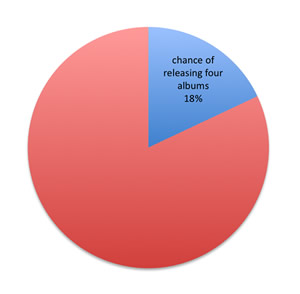
    If we look at the number of albums released by winners of this type of show (X-Factor, Popstars, Pop Idol), we find that less than one in five winners (to date) have released four or more albums.

    18% chance of releasing four albums

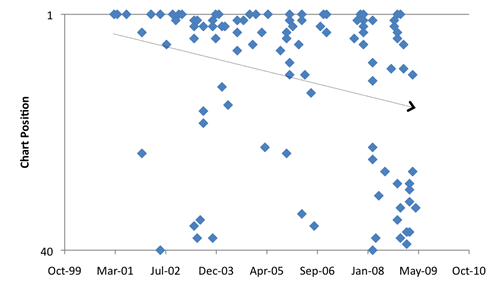
    And we can’t even expect this to improve; plotting all the chart positions (for singles and albums) for all of these winners, over time, shows a distinct downward trend:

    chart_positions

    So, 1 in 40,000 application odds combined with 1 in 5.5 “four albums” odds gives total odds – of entering the X-Factor, winning and becoming a millionaire because of it – of about 1 in 220,000.

    The chances of winning the lottery (with average jackpot winnings of £2,053,984) is 1 in 13,983,816. You would therefore need to buy £64 of tickets for a slightly better chance of winning the jackpot than becoming a millionaire through winning the X-Factor. £64 may seem like a lot, but probably doesn’t compare to the cost of travelling to/from the auditions, taking a day off work to spend a full day there (with food and drink), etc.

    Of course, if you funded your own career, you’d also get a much higher percentage of earnings, wouldn’t be locked into a lengthy contract, and wouldn’t suffer from the stigma of being a reality star winner. So you’d probably even have a longer career than these winners, as plotted below (each bar represents a different winner from one of these reality shows). As a winner, you have a 55% chance of having a pop career of less than one year, and a 36% chance of less than six months.

    career_lifespan

  • My GeoPolitical Memberships

    The GeoPolitical Memberships of Dan ZamboniniMy choice of home means I am implicitly a member of numerous geopolitical groups, including those shown here.

  • Modern America: Designed by a Frenchman

    “As an American citizen who still loves his native country, France, it is heartwarming to see that this country appreciates the beauty and taste that all Frenchmen prize.” Raymond Loewy (1893-1986)

    What are the classic designs that define America? If you compiled a list, it may include:

    If you haven’t guessed by now, Raymond Loewy had a hand in the design of all of the above. He was born in Paris in 1893, and is undoubtedly one of the greatest industrial designers of all time.

  • Image Compression and The Origins Of Life

    Human life on Earth is the result of an extremely fortunate environment. This includes our temperate position near a stable star, in a stable area of the galaxy, with neighbouring bodies of the right size and distance to protect us. It is a Rare Earth.

    As we evolved, this environment continued (and continues) to influence our ongoing design; not just physiologically, but also technologically.

    The Sun emits a wide range of radiation, from very short wavelengths to very long. A star of the Sun’s age and size emits a peak radiation of about 400 to 700 nm, so it’s no surprise that we have evolved to use this particular section of the electromagnetic spectrum for human ‘eyesight’.

    Solar Spectrum
    (Image used under Creative Commons license from Global Warming Art via Wikipedia)

    Once through the Earth’s atmosphere, the Sun’s radiation peaks at roughly 555 nm, which we have handily adapted to detect with the highest sensitivity. This wavelength corresponds to what we interpret as the colour green (the middle of our visible spectrum).

    Electronically, we have developed a system to reproduce much of these ‘visible’ wavelengths, called the RGB color model, as commonly used in displays such as televisions and computer monitors. This system does have some limitations, such as the inability to reproduce all of the visible wavelengths, including violet (about 400nm).

    The interesting result is that, because our eyes do not have an equal sensitivity across red (R), green (G) and blue (B) – from one end of the spectrum to the other – we can compress these three components individually so that only the most important information is retained with accuracy.

    This technique is used by NTSC, the popular television standard used across the Americas, Japan and other countries, to use less bandwidth for non-green colours, as clearly shown in this example.

    Read more about this Chroma Subsampling technique on Wikipedia (note that in the article text, the ‘luma‘ component – or brightness – is largely influenced by green).

  • Guest Posts (2)

    I’m away on vacation, and last week Alex J. Mann took over Lone Gunman for the week and produced five thoughtful posts:

    This coming week, your host is Dan Zambonini—a true Renaissance man.

    Dan is the co-founder of the excellent Box UK (“creators of amazing web apps” and much more besides) and not only has his own tag here at Lone Gunman but also may be the source of more posts than any other person.

    Dan is a great person to follow on Twitter, and you can do that here. If you’re interested in things web you should subscribe to Dan’s company blog here, and if you love design, you should follow his personal Tumblr-style blog here (where you can find further links to his many projects in the sidebar).

    On top of all this, Dan also helps to organise some fine events around the UK. I spoke at one not too long ago (Ignite Cardiff) and now the first Ignite London is currently lining up speakers—one to watch.

    Thanks to Alex and thanks to Dan.