
Letters Remain

Letters Remain

  • About
  • Archive
  • Books
  • The Intricacies and Joys of Arabic

    I imagine that most people with a passing interest in linguistics read Maciej Cegłowski’s short essay in praise of the Arabic language when it was ‘rediscovered’ by popular social networks a few months ago.

    As one who has studied Arabic (albeit MSA and only for nine months or so), the essay brought back fond memories of struggling to comprehend the strange-yet-wonderful intricacies of the Arabic language. Here are just a few the ways that Arabic “twists healthy minds”, according to Cegłowski:

    • The Root/Pattern System: Nearly all Arabic words consist of a three-consonant root slotted into a pattern of vowels and helper consonants.
    • Broken Plurals: Most of the time to make a plural you have to change the structure of the word quite dramatically.
    • The Writing System: The Arabic writing system is exotic looking but easy to learn, which is a rare combination.
    • Dual: Arabic has a grammatical dual — a special form for talking about two of something.
    • The Feminine Plural: Formal Arabic distinguishes between groups composed entirely of women and groups that contain one or more men.
    • Crazy Agreement Rules: e.g. [Maciej’s] absolute favorite is that all non-human plurals are grammatically feminine singular
    • Funky Numbers: ٩ ٨ ٧ ٦ ٥ ٤ ٣ ٢ ١ – The names of the numbers come with truly terrifying agreement rules, like “if the number is greater than three but less than eleven, it must take the opposite gender of the noun that it modifies”.
    • Diglossia: This is where it really helps to love language study.
    Tags:
    arab / language / learning / maciej-ceglowski

    Lloyd Morgan

    16 April 2012
  • Illness Susceptibility and Sleep Quality

    I’ve been ill for a few weeks and I was fairly sure (in my amateur opinion) that it was related to a significant lack of sleep over the last couple of months. Upon returning to full health I decided to do some quick research on my favourite topic: sleep.

    In one recent study looking at sleep habits and resulting susceptibility to the common cold it was found that both sleep length and sleep quality were “important predictors of immunity and, in turn, susceptibility”.

    Specifically, “those who slept an average of fewer than seven hours a night […] were three times as likely to get sick as those who averaged at least eight hours”. Furthermore, people who had 92% sleep efficiency were five and a half times more susceptible compared to those with 98% sleep efficiency (defined as the percentage of time in bed actually asleep).

    The New York Times article that led me to this study continues:

    Sleep and immunity, it seems, are tightly linked. Studies have found that mammals that require the most sleep also produce greater levels of disease-fighting white blood cells — but not red blood cells, even though both are produced in bone marrow and stem from the same precursor. And researchers at the Max Planck Institute for Evolutionary Anthropology have shown that species that sleep more have greater resistance against pathogens.

    The more you know… (the more you sleep?)

    Update: I’ve briefly mentioned this study on Lone Gunman before, but I think the cognitive impact was the most interesting titbit in that Jonah Lehrer article.

    Tags:
    health / sleep

    Lloyd Morgan

    10 April 2012
  • Contextual Writing (Telescopic and Responsive Text)

    How can a writer cater to an audience with diverse preferences and needs (particularly, how much detail they want and how much time they have)? One way is to use telescopic or responsive text.

    Telescopic text is a method of iteratively displaying more and more textual detail on request (I suppose the reader becomes the user). Joe Davis’ brilliant example of telescopic text starts with the phrase “I made tea” before progressing to a 198-word short story through 45-or-so iterations. Wonderful.

    Responsive text is similar in some regards and vastly different in others. Like a responsive design, responsive text ‘scales’ in response to the user’s screen size in order to display an appropriate amount of textual detail. If viewed on a larger screen, Frankie Roberto’s responsive text example points out:

    It’s a bit of an experiment, and I’m not really sure how useful it really is, but I think it’s an interesting idea.

    It could also perhaps be combined with some form of a user interface that allows you to control how much text you want to read. This might be really useful for news articles, for instance – you could decide whether to read full quotes and a detailed backstory, or just the gist.

    I think making this behaviour user-controllable is key and an interface variable/bookmarklet is an interesting concept to follow. One issue I envisage is that adoption of this will come from authors and making this easy-to-implement on the producer-side will take some skill.

    via @foomandoonian

    Tags:
    frankie-roberto / joe-davis / technology / writing

    Lloyd Morgan

    20 March 2012
  • Size and Complexity: Why Animals Are the Way They Are

    From bone strength and oxygen absorption in larger animals, to the perils of surface tension and poor eye design in smaller ones: just some ideas to consider when studying comparative anatomy and why animals are the way they are.

    A perfect take on the topic is J. B. S. Haldane‘s 1928 On Being the Right Size. In this absorbing short essay, Haldane looks at why rhinos have short, thick legs; why the smallest mammal in Spitzbergen is the fox; and, primarily, how the size of an animal determines almost everything about its anatomy.

    There is a force which is as formidable to an insect as gravitation to a mammal. This is surface tension. A man coming out of a bath carries with him a film of water of about one-fiftieth of an inch in thickness. This weighs roughly a pound. A wet mouse has to carry about its own weight of water. A wet fly has to lift many times its own weight and, as everyone knows, a fly once wetted by water or any other liquid is in a very serious position indeed. An insect going for a drink is in as great danger as a man leaning out over a precipice in search of food. If it once falls into the grip of the surface tension of the water—that is to say, gets wet—it is likely to remain so until it drowns. […]

    The higher animals are not larger than the lower because they are more complicated. They are more complicated because they are larger. Just the same is true of plants.

    As is typical of Haldane, he finishes with something a bit more political than anatomical, stating that “just as there is a best size for every animal, so the same is true for every human institution”. Something to consider.

    via The Browser

    Tags:
    animals / evolution

    Lloyd Morgan

    16 March 2012
  • A “Felt Need” Is What Makes Us Buy

    A “felt need” is what differentiates a vitamin from an aspirin: when we crave something (relief from pain), a product that satisfies that desire becomes a must-have rather than a nice-to-have. Realising this and re-framing a product in terms of this craving is an important step in ensuring a product’s success, say Dan and Chip Heath, authors of the excellent Switch and Made to Stick.

    Becoming aware of this idea is what led to the success of Netflix and NetApp… as well as the demise of countless other companies. In a brief article describing how re-framing a nice-to-have product as a must-have is all about discovering and exploiting a specific “felt need”, the Heaths look at Ray Bards failed attempt at getting his “vitamin” book published and how realizing this idea of a felt need led him to become a successful publisher.

    If entrepreneurs want to succeed […] they’d better be selling aspirin rather than vitamins. Vitamins are nice; they’re healthy. But aspirin cures your pain; it’s not a nice-to-have, it’s a must-have. […]

    That aspirin quality is what Bard now looks for in a book. He says that successful books address a deep “felt need” — that is, readers hunger for the answers the book provides. Classic examples would be diet books, personal-finance books, and books that promise you mega success if you’ll just radiate positive energy to the universe, indicating your receptivity to mega success. Bard has become a talented diviner of felt need. Fully half of the books that he publishes become best sellers. […]

    You’ve heard the old saying “If you invent a better mousetrap, the world will beat a path to your door.” Don’t bet on it. The world’s felt need isn’t for a better mousetrap. It’s for a dead mouse. […]

    When engineers or marketers or entrepreneurs get too close to their products, it’s easy to mistake a vitamin for an aspirin. If your team is flirting with delusion, a little love might point you in the right direction.

    Tags:
    business / business-plan / chip-heath / dan-heath / persuasion / psychology / sales

    Lloyd Morgan

    13 March 2012
  • Words to Be Aware Of

    Wish. Try. Should. Deserve. These are four words that “lend themselves to a certain self-deception”, says David Cain of Raptitude, and when you catch yourself using them you should take note, figure out how the word is being used, and maybe try to change your perspective.

    Why? Because, Cain says, these are ‘red flag’ words that often indicate that we’re being “presumptuous, simple-minded, or sneaky”. On using wish:

    Not only is it useless for changing the circumstances, but it reinforces the myth to which I’ve momentarily fallen prey: that my happiness is dependent on my circumstances only and has nothing to do with my attitude. It’s a bitter little plea that life isn’t what I want it to be in this particular moment, and a dead giveaway that I’m not prepared to do anything about it right now.

    Wishing is a desperate, self-defensive behavior. It gives you a little hit of relief from a reality you don’t want to deal with, but it sure doesn’t move things along.

    Of course, in those moments, I’m too consumed by my fantasies to see that my attitude is usually the biggest and most damning feature of the present circumstances. If my attitude sucks, the circumstances suck. But acknowledging that would mean I have to be responsible for it, and it’s easier to instead wish for the cavalry to appear on the horizon and save me.

    There are obviously problems with this line of reasoning (and Cain discusses some of these in the post comments), but I like this general idea and feel that we could all add a word or two to this list.

    via The Browser

    Tags:
    david-cain / language / personal-development / speaking

    Lloyd Morgan

    05 March 2012
  • Bribing and Restaurant Seating

    Does bribing your way into a busy restaurant work as well as it seems to in movies? Is it even possible? Bruce Feiler decided to find out by visiting some of New York’s most overbooked restaurants with nothing more than a pocketful of money (i.e. no reservations). His results were not quite as expected, finding that bribing hosts in order to get seated at upscale restaurants is absolutely possible and works more often than you may think.

    Feiler’s adventures, detailed in an article for Gourmet, act as a more exhaustive guide than the Chow article on restaurant bribing, but the conclusion is the same: $15-30 per person, passed to the right person, can to get you into most restaurants without a reservation (or help you skip a long waiting list) — but be prepared to get turned away and even occasionally get burned.

    What else did Feiler learn from his experiment? Here are his “ten tips on tipping” (read: bribing):

    1. Go.You’d be surprised what you can get just by showing up.
    2. Dress appropriately. Your chances improve considerably if you look like you belong.
    3. Don’t feel ashamed. They don’t. You shouldn’t.
    4. Have the money ready. Prefolded, in thirds or fourths, with the amount showing.
    5. Identify the person who’s in charge, even if you have to ask.
    6. Isolate the person in charge. Ask to speak with that person, if necessary.
    7. Look the person in the eye when you slip him the money. Don’t look at the money.
    8. Be specific about what you want. “Do you have a better table?” “Can you speed up my wait?” A good fallback: “This is a really important night for me.”
    9. Tip the maître d’ on the way out if he turned down the money but still gave you a table.
    10. Ask for the maître d’s card as you’re leaving. You are now one of his best customers.
    Tags:
    food / restaurants

    Lloyd Morgan

    02 March 2012
  • Year Four in Review

    It’s been a quiet year on Lone Gunman with only 76 posts published over the last 366 days: but the response has been as great as ever.

    This year is a special one for Lone Gunman as it was four years ago today–during the last leap day–that the first post was published. It’s been a great experience and the site has evolved a lot, as you can see if you take a look through my previous ‘in review’ posts (Year One, Year Two, Year Three).

    And so the passing of another year can mean only one thing… Lone Gunman is four, and this is Year Four in Review; a compilation of the best things I’ve read on the Internet over the last twelve months.

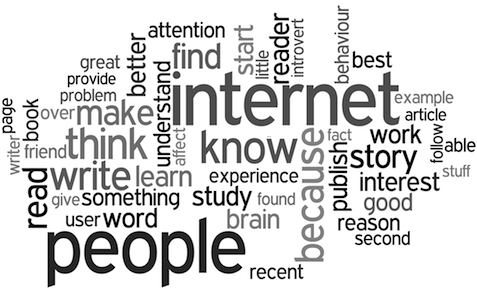
    Lone Gunman Keywords (Year Four) - Wordle.net
    Visualisation of the 50 most frequently used keywords on Lone Gunman in year four.

    Items definitely not to miss are highlighted (probably not through an RSS feed reader). [LG] denotes my original post.

    First, the three most read and shared posts from the past year: Food-Based Body Clock the Key to Jet Lag, Inventive Ways to Control Trolls and Optimal Caffeine Consumption.

    Relationships

    • A favourite of mine from this past year was when David Hayes (you’ll hear more from him later) shed light on the advan­tages of Internet-originating rela­tion­ships and how friend­ship cre­ation has evolved. [LG]
    • It’s no surprise to most of you that I’m an introvert of sorts. This year’s addition to the ‘introversion’ tag is Carl King’s list of myths about intro­verts. [LG]
    • On a larger scale, we delve into the research around Malcolm Gladwell’s Tipping Point theory and discover that ‘six degrees of sep­a­ra­tion’ is cor­rect, but there is no evi­dence for super-connected ‘trend gate­keep­ers’ (such as Gladwell’s ‘Con­nec­tors’). [LG]
    • From society to the workplace, and I look at the winner of the 2010 Ig Nobel Prize for Man­age­ment: beating the Peter Principle by promoting at random. [LG]
    • Vonnegut describes, like only he can, the narrative arcs in our stories and lives. Derek Sivers goes into more detail, explaining that this is why we cre­ate unnec­es­sary and non-existent dra­mas in our lives. [LG]
    • Finally, one that I can’t believe I’ve not posted about before: David Fos­ter Wallace’s 2005 com­mence­ment address at Kenyon Col­lege. [LG]

    Negotiation/Persuasion

    • A mix between this category and the one above, I was fascinated by the devi­ous secret ways to effec­tively con­trol trolls and other abu­sive users on online communi­ties (i.e. the hell­ban, slow­ban, and errorban). [LG]
    • Moti­va­tion, Abil­ity and Trig­ger are the three elements that are necessary to change a person’s behaviour, according to BJ Fogg’s behaviour grid that explains the fif­teen ways that behav­iour can be changed. [LG]
    • I loved the story behind Syd­ney Frank’s marketing/branding strat­egy for Grey Goose vodka. The key? Narrative sells. [LG]
    • Negotiating? We already know the opti­mal start­ing prices for nego­ti­a­tions and auc­tions, but this year a researcher from that study goes into detail on nego­ti­a­tion tac­tics and the rea­sons why you should make the first offer. [LG]
    • Common wis­dom would suggest that the more cer­tain a per­son is on a sub­ject, the more per­sua­sive and cred­i­ble we per­ceive them to be. The opposite is sometimes true: for experts, uncer­tainty has a positive impact on per­sua­sive­ness and cred­i­bil­ity. [LG]
    • Infomercial master Tim Hawthorne, in an interview on Mixergy, let us in on the many infomer­cial sales tech­niques that his data show are the most per­sua­sive. [LG]

    The Brain, Our Senses

    • Let’s start at the beginning with this fascinating evolutionary his­tory of the brain. [LG]
    • And now something very modern on the evolutionary scale: the neuroscience perspective on what’s happening when we read. [LG]
    • Two photons on the retina? Three molecules up your nose? Almost hearing Brownian motion? It blew my mind when I discovered how sen­si­tive and amaz­ing our senses really are. [LG]
    • The brain, our senses, and a bit of psychology are all involved in a short extract from the book Art and the Senses that sum­marises the var­i­ous ways that our taste per­cep­tion can be altered by our other senses. [LG]
    • The foods we eat every day has an effect on our brain (of course), and here’s a wonderful article where the author of Your Brain on Food briefly describes how some of the chem­i­cals present in ‘drugs’ such as choco­late, bananas, alco­hol and nut­meg affect us (with a bit of space travel included, just for fun). [LG]

    Food

    • Following on from that last post, one of the most used ‘drugs’ is caffeine. Isn’t it time you learn­t the opti­mal way of con­sum­ing caffeine, the world’s most-used stim­u­lant? [LG]
    • So we know the varied ways that food can influence our bodies, but here’s a novel approach to a modern problem: recent research suggests that food can help us with avoiding jet lag (thanks to food-based cir­ca­dian rhythms). [LG]
    • This past year saw the end of Mark Bittman’s wonderful NYT food column, The Minimalist. To round-up those thirteen years, here’s a list of Mark Bittman’s favourite twenty-five recipes from his Min­i­mal­ist years. [LG]
    • Another drug, but a bit more dangerous than caffeine, is alcohol, right? Well the jury’s definitely still out and the research is fascinating but contradictory. The latest: abstain­ing from alco­hol appears to increase your risk of dying pre­ma­turely. [LG]
    • And if you need another reason to get to the bar, it seems that alco­hol drinkers earn, on aver­age, 10% more than abstain­ers (pdf). Drink up! [LG]

    Learning

    • Are the names Mono­type Cor­siva, Comic Sans Ital­i­cized or Haettenschweiler enough to make you run for the hills? Maybe you should give them another chance, as long-term learn­ing and reten­tion improved when class­room mate­r­ial was set in a hard-to-read font. [LG]
    • One to be aware of if you find yourself around infants and want to instil a good image: if you’re “unre­li­able” infants will quickly learn not to learn from you, opt­ing instead for adults that appear con­fi­dent and knowl­edge­able. [LG]
    • And what about when the children are not around you, but in front of the TV? Go for Sesame Street over Teletubbies: for a child’s cog­ni­tive devel­op­ment, the medium (TV/games/books) doesn’t mat­ter but the con­tent is cru­cial. [LG]
    • Something that’s worth remembering and taking the time to consider is the realisation that when we first encounter infor­ma­tion we believe it imme­di­ately and with­out thought, only to fully eval­u­ate its truth­ful­ness moments later pro­vided we are not dis­tracted. In other words: engineer a distraction-free environment when doing critical tasks. [LG]

    Design

    • Think about the meaning behind a lot of the icons you see and use on a daily basis. If they’re well designed, they’ve found what Lukas Mathis, taking his cue from the excellent Under­stand­ing Comics, calls the sweet spot between uni­ver­sal­ity and real­ism that allows for optimum recognition. [LG]
    • Negotiation, psychology and programming: three of the five most impor­tant non-designer skills that every designer should master. [LG]

    Technology

    • Going for a coastal walk? Think about how you could estimate that distance, because that’s undoubt­edly the best anal­ogy for explain­ing the dif­fi­culty in pro­vid­ing esti­mates for soft­ware projects. [LG]
    • If you’ve got just one tweet, here’s how to com­press and encode the Mona Lisa (and other pieces of art) to fit within a 140 char­ac­ter text limit. [LG]

    Other

    • So Amazon is destroying local bookstores and this is a Bad Thing, right? Maybe not. There’s an argument that Ama­zon is actually doing your local community a favour by competing so strongly with local bookstores. [LG]
    • If you want to improve your writing, stop reading ‘rules’ and other such bumf. Instead you need ‘tools’, and here’s Roy Peter Clark’s fifty writ­ing tools to improve your writ­ing (Clark is the VP of The Poynter Institute). [LG]
    • How did it all begin, how did we get here, and how will it all end? That’s what Ethan Siegel answers in his won­der­fully acces­si­ble and enlight­en­ing com­plete his­tory of the uni­verse (with pictures!). [LG]
    • Curiosity, relinquishment, simplicity, precision and The Void: five of Eliezer Yud­kowsky’s twelve virtues of ratio­nal­ity. [LG]
    • 1.4 cigarettes, 0.5 litres of wine, 2 days living in New York: these are all equivalent to 1 micromort. ‘Micromort’, you say? Yes: an under­stand­able scale and unit of risk, a micro­mort is equivalent to a one-in-a-million probability of death. Check out the entire list. [LG]

    Guest Posts

    Finally, this year I’m extremely grateful to two friends for taking over Lone Gunman during a vacation. Their posts were excellent, and I recommend you go back and review them:

    • david (b) hayes wrote a wonderful series called How to Internet. Check out David’s series of posts.
    • Andrew Smith published three posts on entirely different topics: storytelling, foreclosure and your career. Check out Andrew’s posts, too.

    Thanks!

    Tags:
    lettersremain-review

    Lloyd Morgan

    29 February 2012
  • The Inefficiencies of Local Bookstores

    We should not hold Amazon in contempt for pressuring local independent bookstores to the brink of closure and instead should embrace the company for taking advantage of inefficiencies, furthering a reading culture, and–believe it or not–helping us ‘buy local’ more effectively.

    In response to Richard Russo‘s recent New York Times article berating a recent not-so-well-considered Amazon promotion, Farhad Manjoo takes a different perspective on the Amazon vs. independent bookstores debate, this time coming down firmly in the Amazon camp.

    I get that some people like bookstores, and they’re willing to pay extra to shop there. They find browsing through physical books to be a meditative experience, and they enjoy some of the ancillary benefits of physicality (authors’ readings, unlimited magazine browsing, in-store coffee shops, the warm couches that you can curl into on a cold day). And that’s fine: In the same way that I sometimes wander into Whole Foods for the luxurious experience of buying fancy food, I don’t begrudge bookstore devotees spending extra to get an experience they fancy.What rankles me, though, is the hectoring attitude of bookstore cultists […] when they argue that readers who spurn indies are abandoning some kind of “local” literary culture. There is little that’s “local” about most local bookstores. Unlike a farmers’ market, which connects you with the people who are seasonally and sustainably tending crops within driving distance of your house, an independent bookstore’s shelves don’t have much to do with your community. Sure, every local bookstore promotes local authors, but its bread and butter is the same stuff that Amazon sells—mass-manufactured goods whose intellectual property was produced by one of the major publishing houses in Manhattan. […]

    Wait, but what about the bookstores’ owners and employees—aren’t they benefitting from your decision to buy local? Sure, but insofar as they’re doing it inefficiently (and their prices suggest they are), you could argue that they’re benefiting at the expense of someone else in the economy. After all, if you’re spending extra on books at your local indie, you’ve got less money to spend on everything else—including on authentically local cultural experiences. With the money you saved by buying books at Amazon, you could have gone to see a few productions at your local theater company, visited your city’s museum, purchased some locally crafted furniture, or spent more money at your farmers’ market. Each of these is a cultural experience that’s created in your community.

    That said, occasionally I like to pay a ‘premium’ and buy books from local stores, but not for any of the reasons mentioned above. Rather, I hope for that bit of literary serendipity and haphazard discovery that only seems to happen in local independents.

    Tags:
    amazon / books / business

    Lloyd Morgan

    15 February 2012
  • The Good and Bad of Enumerated Lists

    Writing by enumeration–writing a ‘list of n things’–restricts you to a structure that is easier to produce and is easier for readers to follow and comprehend, but limits free thought. That’s one of many points that Paul Graham makes in an essay discussing the merits and disadvantages of writing enumerated lists.

    One obvious negative that Graham points out is that, in most situations, lists of n things are used by lazy writers not even attempting to stretch themselves, or read by readers who don’t fully trust the author to produce an appealing-enough short-form essay. And of course, there’s the sound advice to almost always avoid lists with ‘the’ before the number, as a list is rarely exhaustive and instead you’re likely being fooled into believing it is (read: linkbait).

    Because the list of n things is the easiest essay form, it should be a good one for beginning writers. And in fact it is what most beginning writers are taught. The classic 5 paragraph essay is really a list of n things for n = 3. But the students writing them don’t realize they’re using the same structure as the articles they read in Cosmopolitan. They’re not allowed to include the numbers, and they’re expected to spackle over the gaps with gratuitous transitions (“Furthermore…”) and cap the thing at either end with introductory and concluding paragraphs so it will look superficially like a real essay. […]

    Another advantage of admitting to beginning writers that the 5 paragraph essay is really a list of n things is that we can warn them about this. It only lets you experience the defining characteristic of essay writing on a small scale: in thoughts of a sentence or two. And it’s particularly dangerous that the 5 paragraph essay buries the list of n things within something that looks like a more sophisticated type of essay. If you don’t know you’re using this form, you don’t know you need to escape it.

    As a purveyor of fine hyperlinks since 2008, I also feel that posting (to) a list of n things is also, in most situations, lazy link-blogging. However there are always some that will make the cut and get posted, and Graham’s essay helps one see why they might have been especially appealing.

    Tags:
    lists / paul-graham / writing

    Lloyd Morgan

    13 February 2012
←Newer Posts Older Posts→