
Letters Remain

Letters Remain

  • About
  • Archive
  • Books
  • WordPerfect Business Advice

    In 1980, as a $5-an-hour part-time office manager, W. E. Peterson joined the small company that would go on to become WordPerfect Corporation. Then, twelve years later, after helping grow the company to half a billion dollars in annual sales and becoming the Executive Vice President, Peterson was forced out of the company and set out to chronicle the rise and fall of WordPerfect in his book, Almost Perfect.

    You can read Almost Perfect online like I did after hearing about it from Jeff Atwood two years ago. Why am I posting this now? Now that the book has a Kindle version I’m re-reading it and liked this paragraph of business advice from the afterword:

    If you read [Almost Perfect] hoping to learn more about running a business, then I hope you noted the parts about teaching correct principles and allowing employees to govern themselves. In spite of the problems I had understanding and implementing this philosophy, I am convinced it is the best way to run a business. In today’s competitive environment, businesses can no longer afford the overhead of one supervisor for every five or six employees. As organizations flatten and supervision decreases, employees will make more decisions on their own and govern themselves much more than they have in the past. If a company is to function effectively, its employees must have a good understanding of what is expected of them. Very small organizations may be able to find success without defining and teaching correct principles, but any business with more than 25 or 30 people must get organized.
    Tags:
    books / business / entrepreneurship / w-e-peterson / wordperfect

    Lloyd Morgan

    23 March 2011
  • Psychic Numbing and Communicating on Risk and Tragedies

    I’ve been preoccupied lately with the developing aftermath of the Tōhoku earthquake. Unlike other disasters on a similar or greater scale, I’m finding it easier to grasp the real human cost of the disaster in Japan as my brother lives in Kanagawa Prefecture and therefore there are less levels of abstraction between me and those directly affected. You could say that this feeling is related to what Mother Teresa was referring to when she she said “If I look at the mass I will never act. If I look at the one, I will“.

    If I had no direct connection with Japan I assume the dry statistics of the sizeable tragedy would leave me mostly unaffected — this is what Robert Jay Lifton termed “psychic numbing”. As Brian Zikmund-Fisher, a risk communication expert at the University of Michigan, introduces the topic:

    People are remarkably insensitive [to] variations in statistical magnitude. Single victims or small groups who are unique and identifiable evoke strong reactions. (Think, for example, the Chilean miners or “baby Jessica” who was trapped in the well in Texas in 1987.) Statistical victims, even if much more numerous, do not evoke proportionately greater concern. In fact, under some circumstances, they may evoke less concern than a single victim does. […]

    To overcome psychic numbing and really attach meaning to the statistics we are hearing […] we have to be able to frame the situation in human terms.

    Zikmund-Fisher links heavily to Paul Slovic‘s essay on psychic numbing in terms of genocide and mass murder (pdf): an essential read for those interested in risk communication that looks at the psychology behind why we are so often inactive in the face of mass deaths (part of the answer: our capacity to experience affect and experiential thinking over analytical thinking).

    Tags:
    communication / risk / statistics

    Lloyd Morgan

    21 March 2011
  • How We Read

    What we know about how we learn to read and how our ability to read developed is fascinating, and in a review of a book that looks at exactly this — Stanislas Dehaene’s Reading in the Brain — Jonah Lehrer offers us a wonderful teaser on exactly that: the hows of reading, from a neuroscience perspective.

    The introduction:

    Right now, your mind is performing an astonishing feat. Photons are bouncing off these black squiggles and lines — the letters in this sentence — and colliding with a thin wall of flesh at the back of your eyeball. The photons contain just enough energy to activate sensory neurons, each of which is responsible for a particular plot of visual space on the page. The end result is that, as you stare at the letters, they become more than mere marks on a page. You’ve begun to read.

    Seeing the letters, of course, is just the start of the reading process. […] The real wonder is what happens next. Although our eyes are focused on the letters, we quickly learn to ignore them. Instead, we perceive whole words, chunks of meaning. […] In fact, once we become proficient at reading, the precise shape of the letters — not to mention the arbitrariness of the spelling — doesn’t even matter, which is why we read word, WORD, and WoRd the same way.

    Later in the review, Lehrer’s description of what it is like to suffer from pure alexia reads like something taken directly from Oliver Sacks‘ essential and eye-opening book The Man Who Mistook His Wife for a Hat.

    via Mind Hacks

    Tags:
    books / jonah-lehrer / psychology / reading / stanislas-dehaene

    Lloyd Morgan

    10 March 2011
  • Child Development: Content, Not Medium, Matters (Why Sesame Street Beats Teletubbies)

    Debates have raged over the last couple of years on the effects (detrimental or not) of television, computer games (violent or not) and the Internet on a child’s cognitive development. Taking excerpts from a review article that provides an excellent summary of the topic, Jonah Lehrer makes it clear: for a child’s cognitive development, the medium doesn’t matter but the content is crucial.

    First, an explanation of why this is:

    In the same way that there is no single effect of “eating food,” there is also no single effect of “watching television” or “playing video games.” Different foods contain different chemical components and thus lead to different physiological effects; different kinds of media have different content, task requirements,and attentional demands and thus lead to different behavioral effects.

    And some findings on how development is affected by various children’s shows:

    • Sesame Street is associated with “a wide assortment of positive outcomes, including improved performance on measures of school readiness, expressive language capabilities, numeracy skills and vocabulary size”.
    • Similar effects have been found for Blue’s Clues, Dora the Explorer and Clifford the Big Red Dog.
    • Teletubbies is associated with the slowing down of early education.
    • Material targeted to infants, such as Baby Einstein and Brainy Baby are awful: “each hour of daily viewing between the ages of 8 and 16 months led to a significant decrease in the pace of language development” and a 17 point decrease in language skills (in comparison, “daily reading with a parent was associated with a 7 point increase in the language skills of 2 year olds”).

    As for video games, action games have been associated with “a number of enhancements in vision, attention, cognition, and motor control”.

    The article goes on to describe the required format for children’s television shows that wish to promote early literacy: “the use of child-directed speech, elicitation of responses, object labeling, and/or a coherent storybook-like framework throughout”. In other words, they need to “engage the young viewer, […] elicit direct participation from the child, provide a strong language model, avoid overloading the child with distracting stimulation, and include a well-articulated narrative structure”.

    via @TimHarford

    Tags:
    parenting / psychology / technology / tv

    Lloyd Morgan

    02 March 2011
  • Year Three in Review

    And so another year has passed since my last review. It’s been a busy year of learning a new language in my equally new country of residence, changing jobs (and everything that entails) and, of course, writing 200 posts here on Lone Gunman (and thanks again to you: there’s been hundreds of comments… and 49,810 spam comments).

    The passing of another year can mean only one thing… Lone Gunman is three, and this is Year Three in Review.

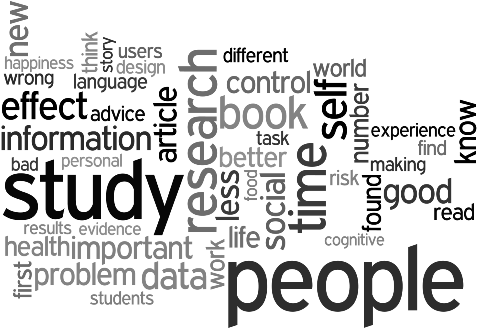
    Lone Gunman Keywords (Year Three) - Wordle.net
    Visualisation of the 50 most frequently used keywords on Lone Gunman in year three.

    Items definitely not to miss are highlighted (probably not through an RSS feed reader). [LG] denotes my original post.

    First, the three most read and shared posts from the past year: Scientifically-Proven Ways to Improve Creativity, Statistical Literacy Guides and (the infrequently updated) Rules of a Gentleman.

    Creativity

    • So what exactly is this “creativity” thing, anyway? I looked at the theories of Mihaly Csikszentmihalyi (author of Creativity), highlighting the five stages of creativity: preparation, incubation, insight, evaluation and elaboration.
    • I discovered the wikis that accompany O’Reilly’s ‘97 Things…‘ series of books: there’s one for programmers, software architects and project managers.
    • A favourite quote on creativity came from a wide-ranging interview with Ira Glass on creativity and being wrong. [LG]
    • I make no secret of loving sleep; it’s a fascinating thing with many physiological and psychological benefits. Another benefit: dreaming is extremely important for creativity and insight. [LG]

    Sleep

    • Did someone mention sleep? Here’s a summary of the surprising and drastic physiological and cognitive effects of sleep deprivation. [LG]
    • If the benefits described in those last couple of links aren’t enough to persuade you to get back into bed, how about the correlation between a lack of quality sleep and an increase in premature death?
    • So off to bed, and don’t forget the importance of a stable daily routine in getting a good night’s sleep. [LG]

    Happiness

    • If you’re new to happiness studies (subjective well-being, as it’s often called in the literature), a fantastic introduction is David Brooks’ comprehensive yet succinct summary of some of the most interesting research into what does and does not make us happy. [LG]
    • In addition to all that, another study looking at ‘technological affluence’ concludes that ownership of almost all types of technological goods increases our happiness… except for televisions. [LG]
    • So with these (and many other) factors influencing our happiness, I guess it’s time to ask the question, How much of our happiness can be attributed to our genes? [LG]
    • And what about happiness in our work life? I summarised the findings from three separate sources showing that autonomy, complexity, mastery, purpose and a connection between effort and reward are the major factors leading to job satisfaction.
    • And after you’re satisfied, how to keep motivated? Clay Shirky and Daniel Pink let in on the secrets of workplace motivation. [LG]

    General Personal Development

    • Looking for further motivation, life satisfaction or useful advice? Clayton Christensen’s advice on how to apply management theory principles to one’s personal life is full of excellent little insights to help you along. [LG]
    • Have goals you would like to achieve? Contrary to some conventional wisdom, research suggests that in some circumstances we should keep our goals secret [LG] and concentrate on the ‘big picture’ [LG].
    • Then again, Leo Babauta tells us that goals are something we should ‘let go of’. [LG]
    • So what shall we do instead? Chad Fowler’s growth philosophy is worth keeping in mind: are you better than yesterday? [LG]
    • If you ever feel uncomfortable turning people down or requesting anything, discovering the difference between ‘Askers’ and ‘Guessers’ could very well change your social life. [LG]
    • Michael Lopp’s advice for writing that just happens to be relevant in all walks of life: become comfortable with incompleteness. [LG]
    • When the author of Wrong educated us on the merits and pitfalls of being wrong, we also discovered how to spot bad advice: it’s simplistic, definite, universal and certain. My accompanying post highlighted some depressing facts about being wrong.
    • It’s also worth keeping in mind Dan Buettner’s TEDx talk on the myths of living and the nine common lifestyle habits of those who live to be active at ages of 100+. [LG]

    Physical Health and Fitness

    • On the topic of keeping sharp into old age: physical exercise and various other leisure activities have a “very clear” correlation with mental acuity and the reduction of mental decline. [LG]
    • Another way to help reduce mental decline: language. Bilingualism has been found to correlate nicely with a lower incidence of dementia. [LG]
    • A great selection of other body-based advice came from veteran trainer Mike O’Donnell’s extensive list of assorted health and fitness tips. [LG]
    • My favourite post from the last year is an easy one to choose. It is also an extremely important one: Information is Beautiful‘s comprehensive data visualisation mapping the the effectiveness (or not) of a wide range of health supplements. If you read and share one thing; make it this. [LG]
    • Do you want to know what else doesn’t work? Hand sanitisers; ignore them and get a flu shot and wash your hands sensibly instead. [LG]
    • So exercise is good, right? We’ve agreed on that? So how to make ourselves do it? If we’re trying to persuade ourselves (not just for exercise and likely not just ourselves, of course) interrogative self-talk is more motivational than declarative statements (“Will I…?” is superior to “I will….”). [LG]

    Persuasion

    • Made to Stick was one of the best books I read last year, and the authors have provided an outline of the six principles of creating ‘sticky’ ideas: simplicity, unexpectedness, concreteness, credibility, emotions, stories. [LG]
    • Rand Fishkin, co-founder of SEOmoz, created the Illustrated Guide to the Science of Influence and Persuasion, based on six principles from Robert Cialdini’s much lauded Influence (reciprocation, commitment and consistency, social proof, liking, authority, scarcity). [LG]
    • There’s also the ten timeless influencers of conformity to help understand why people are influenced in the first place. [LG]
    • Is someone or something wrong? Remember that corrections only ‘work’ if we already believe the corrected information, otherwise they reinforce our incorrectly held beliefs.
    • Experimenting with pricing or sales?
      • Giving a portion of voluntary payments to charity could be worthwhile. [LG]
      • And closely related to an old favourite, scarcity marketing, is the influence of sold-out products on our purchasing behaviour. [LG]
      • This year I first heard of the denomination effect: the phenomenon whereby we are more willing to spend the same sum of money in coins than in bills (because there are fewer psychological barriers).
      • And finally, when prices are reduced, the harder the mental computation required to determine the magnitude of that reduction, the smaller we beilieve the reduction to actually be. That’s cognitive fluency in action. [LG]
    • So that’s one specific way cognitive fluency influences behaviour. For more, PsyBlog provided a summary of cognitive fluency research. [LG]
    • And practice your accent: cognitive fluency combined with accents suggests: as non-native speech is harder to process than native speech, we trust it less. [LG]
    • And be wary of neuro-babble: irrelevant neuroscience jargon added to an argument persuades us… even if we’re neuroscience students. [LG]
    • Dealing with ‘sacred values’? To persuade describe tradeoffs in terms of “costs and benefits” and “analysis” and definitely not in terms of financial incentives. [LG]
    • Wondering whether to use numbers or stories to persuade. One study suggests that numeric and normative feedback (scores and comparative information) is more persuasive and effective than text feedbcak. [LG]
    • This brings into perspective the idea of furthering scientific causes by moving away from the holier-than-thou mindset of facts, data and the scientific method and toward personal, persuasive stories. [LG]
    • So how about persuasion through design patterns?
      • Dan Lockton’s Design with Intent is a set of honest and open persuasive design patterns. [LG]
      • Of course, be aware of the opposite: dark patterns are ‘evil’ design patterns. [LG]
    • Behavioural game design is a hugely fascinating topic that gained a lot of followers throughout 2010. The theories apply to a lot more than gaming, but it’s one of the best ways to approach the topic. To that end, every link on my post introducing behavioural game design is worth a read.

    Business and Entrepreneurship

    • After reading about the amount of information large consumer segmentation businesses track and use I researched it myself and found some fascinating consumer segmentation resources.
    • I also spent some time following Patrick McKenzie’s journey as a one-man Micro ISV: the compilation of his best posts is a worthwhile list of practical advice for small companies. [LG]
    • For shorter attention spans and those with less time, all of Om Malik’s chosen ten essential startup essays are worthwhile reads. [LG]

    Technology

    • After Joel Spolsky retired his hugely popular blog, Jan Willem Boer summarised each Joel on Software post into one or two sentences: that became an essential summary of business and technology wisdom. [LG]
    • I discovered the wikis that accompany O’Reilly’s ‘97 Things…‘ book series: there’s 97 Things Every Programmer Should Know, 97 Things Every Software Architect Should Know and 97 Things Every Project Manager Should Know. [LG]
    • And moving away from the business side of technology, Nicholas Carr argued for the ‘delinkification’ of web-based articles as a way to decrease the cognitive load of online reading, thereby increasing our attention span. An intriguing idea. [LG]

    Books

    • For those with attention spans conducive to reading books, you may well be interesting to hear of the fascinating study (pdf) suggesting that the mere presence of books in the household can help a child’s intellectual development. [LG]
    • So get buying books! And for a quick list of excellent reads, it’ll be tough to beat Derek Sivers’ book list. [LG]

    Education

    • Talking of intelligence development, this year I learnt that simply knowing that intelligence can improve, improves intelligence. [LG]
    • A great resource for those looking to actively increase their own knowledge through study are these nine evidence-based study tips. [LG]
    • However, if you don’t have to time for deliberate practice, remember that passive exposure has been shown to be as effective as practice. [LG]
    • One of my most visited posts was the UK Government’s series of accessible yet comprehensive ‘statistical literacy guides’.
    • But why should you care about statistics? Clive Thompson believes that statistical literacy (“the language of data”) is crucial to public life and functioning successfully in our future society. [LG]
    • And if you’re a designer? You absolutely must become statistically literate in order to be an honest designer, says Smashing Magazine. [LG]
    • And business education? If you go to business school, you’ll likely hear seven or so influential and game-changing speeches. Save some time and money with The Seven Keynote MBA. [LG]

    Other (Typography, Psychology, Writing, etc.)

    • A fascinating study came to my attention looking at how the physical properties of objects we touch influences our judgement and decision-making. [LG]
    • And any talk even related to language can’t pass without pointing out another fascinating article courtesy of researcher Lera Boroditsky; this time on how language can influence entire cultures. [LG]
    • FontShop‘s collection of educational typography ebooks. [LG]
    • With only twelve tips, Stephen King promises to teach us all we need to know about writing in ten minutes. [LG]
    • For the future there’s Douglas Coupland’s enjoyable prophesising on what the coming ten years hold for society and some new words to help us cope with the transition.
    • In terms of personal relationships, I enjoyed the insightful post looking at the differences between male and female friendships. Amusing, perceptive and very accurate. [LG]

    Thanks!

    Now that my life is starting to resemble something close to “normal”, expect a much more regular posting schedule over the next twelve months.

    Tags:
    lettersremain-review

    Lloyd Morgan

    01 March 2011
  • Background Noise and Taste Perception

    It has been suggested that the physiological effects of pressurisation are responsible for the blandness of in-flight airline meals. However the real reason behind “diminishing gustatory food properties” (food tasting rubbish) while 32,000 feet above sea level could be a lot simpler: the background noise.

    A study conducted by Unilever R&D and the University of Manchester has shown that the background noise experienced while flying reduces the perception of food properties not related to sound (saltiness, sweetness, etc.) while simultaneously increasing the perception of food properties related to sound (e.g. crunchiness)–in other words, the background noise we experience while flying could be responsible for the food we eat being tasteless but crunchy.

    On possible future applications of the findings, the BBC reports:

    “We are still at an early stage of proceedings and this is a relatively small study to really draw definitive conclusions from […] but they suggest that the retail sector could well tailor their choice of food for a given environment.”

    Also in the group’s findings there is the suggestion that the overall satisfaction with the food aligned with the degree to which diners liked what they were hearing – a finding the researchers are pursuing in further experiments.

    Tags:
    flying / food / senses

    Lloyd Morgan

    11 February 2011
  • Timed Exposure Can Be As Good As Practice

    We know that deliberate practice is an important part of learning (and mastering) new skills–but what role, if any, does mere passive exposure play? Can relevant background stimulation help us to reduce the amount of effort and practice necessary to master a skill?

    To answer these questions Jonah Lehrer contacted the authors of a recent paper studying exactly this and found that passive exposure can be as effective as practice, drastically cutting the effort required to learn.

    These experiments […] demonstrated that listening to relevant background stimulation could be just as effective as slaving away at the task itself, at least when the subjects had practiced first. In fact, the scientists found that we don’t even have to be paying conscious attention to the stimuli – subjects still benefited from the stimulation even when distracted by an entirely unrelated task. […]

    Yes you do have to do the task, just not for the whole time. The main result is that if you practice for 20 minutes, and then you are passively exposed to stimuli for 20 minutes, you learn as if you have been practicing for 40 minutes. You can cut the effort in half, and still yield the same benefit. […]

    On a practical level, the present results suggest a means by which perceptual training regimens might be made markedly more efficient and less effortful. The current data indicate that it may be possible to reduce the effort required by participants by at least half, with no deleterious effect, simply by combining periods of task performance with periods of additional stimulus exposure.

    Along with the obvious caveats (the study looked only at auditory discrimination tasks), the published article offers some practical clarifications:

    Learning was enhanced regardless of whether the periods of additional stimulation were interleaved with or provided exclusively before or after target-task performance, and even though that stimulation occurred during the performance of an irrelevant (auditory or written) task. The additional exposures were only beneficial when they shared the same frequency with, though they did not need to be identical to, those used during target-task performance. Their effectiveness also was diminished when they were presented 15 min after practice on the target task and was eliminated when that separation was increased to 4 h.

    Tags:
    learning / neuroscience / personal-development / psychology

    Lloyd Morgan

    07 February 2011
  • The Numbers in Our Words: Words of Estimative Probability

    Toward the end of this month I will almost certainly post the traditional Lone Gunman Year in Review post. Exactly how likely am I to do this? Am I able to quantify the probability that I’ll do this? By using the phrase “almost certainly”, I already have. To provide unambiguous, quantitative odds of an event occurring based solely on word choice, the “father of intelligence analysis”, Sherman Kent, developed and defined the Words of Estimative Probability (WEPs): words and phrases we use to suggest probability and the actual numerical probability range to accompany each. Kent’s idea has had a mixed reception in the intelligence community and the disregarding of the practice has been blamed, in part, for the intelligence failings that lead to 9/11. The words by decreasing probability:
    • Certain: 100%
    • Almost Certain: 93% ± 6%
    • Probable: 75% ± 12%
    • Chances About Even: 50% ± 10%
    • Probably Not: 30% ± 10%
    • Almost Certainly Not: 7% ± 5%
    • Impossible: 0%
    (Graph from the CIA’s Psychology of Intelligence Analysis and 2012’s Critical Thinking for Strategic Intelligence.)
    The practice has also gained some advocates in medicine, with the following list of definitions formed:
    • Likely: Expected to happen to more than 50% of subjects
    • Frequent: Will probably happen to 10-50% of subjects
    • Occasional: Will happen to 1-10% of subjects
    • Rare: Will happen to less than 1% of subjects
    It would be nice if there were such definitions for the many other ambiguous words we use daily.
    Tags:
    language / probability / sherman-kent / statistics

    Lloyd Morgan

    03 February 2011
  • Cosmic View to The Know Universe

    In 1957, the Dutch educator Kees Boeke wrote Cosmic View, a essay exploring “many levels of size and structure, from the astronomically vast to the atomically tiny”.

    Boeke’s essay went on to inspire the 1968 animated short, Cosmic Zoom.

    Cosmic View and Zoom then inspired the more famous Charles and Ray Eames documentary, Powers of Ten, created in 1977 (previously).

    Unknown to me until recently was the 1996 Oscar-nominated documentary, narrated by Morgan Freeman, that was inspired by all of the above: Cosmic Voyage.

    Similarly, NASA’s Astronomy Picture of the Day for January 20th 2010 was also inspired by all of these. This was not a picture, but the American Museum of Natural History’s documentary, The Known Universe.

    All of these are inspiring, breathtaking videos that are short enough for any schedule:

    • Cosmic Zoom (08:01)
    • Powers of Ten (09:01)
    • Cosmic Voyage (36:06)
    • The Known Universe (06:31)
    Tags:
    films / inspiring / science

    Lloyd Morgan

    24 January 2011
  • Body Language and Signalling Power

    If we are prompted to recall a time in which we had power, we temporarily behave in the exact same way as those who have been given actual power (or ‘resource control’) and believe we currently have power, too. Interestingly, this method doesn’t signal power to others: observers are able to differentiate, despite the fact that we behave in an identical manner.

    The solution: subtle body language changes have been shown to make people believe they currently have power while also effectively signalling power to others.

    [Researchers have] found that open, expansive postures (widespread limbs and enlargement of occupied space by spreading out one’s body), compared with closed, constricted postures (limbs touching the torso and minimization of occupied space by collapsing the body inward), increased feelings of power and an appetite for risk. […]

    More impressively, expansive postures also altered the participants’ hormone levels. […] Expansive postures led individuals to experience elevated testosterone (T) and decreased cortisol (C). This neuroendocrine profile of High T and Low C has been consistently linked to such outcomes as disease resistance and leadership abilities.

    via @mocost

    Tags:
    body-language / power / psychology

    Lloyd Morgan

    23 January 2011
←Newer Posts Older Posts→